
If you have been paying close attention to Southeast Asian investment news over the past two years, you will notice a highly intriguing trend: an increasing number of global tech giants are anchoring their data centers, cloud infrastructure, and AI computing nodes right here in Malaysia.
Moreover, these companies are not just “testing the waters.” These are long-term, regional-scale commitments involving billions of dollars. Google announced a $2 billion investment to build its first data center and Google Cloud Region in Malaysia; AWS committed a long-term investment of approximately $6.2 billion; and Oracle announced a massive cloud infrastructure investment exceeding $6.5 billion.
The initial reaction for many might be: Is it simply because Malaysia is cheap? The answer is both yes and no.
If low cost were the only driving factor, it wouldn’t fully explain why a wave of world-leading enterprises are choosing Malaysia as a critical hub for their regional digital infrastructure. The true reason is that Malaysia concurrently possesses several core factors most prized by data center operators: strong policy support, geographical advantages, stable power access, expandable land resources, robust network connectivity, and a rapidly growing domestic and regional demand for cloud and AI services.
In other words, what Malaysia is absorbing is not just “server room construction,” but a generational opportunity to spearhead the next phase of the digital economy, cloud services, and AI infrastructure upgrades across Southeast Asia.
Why Did This Data Center Boom Ignite in Malaysia First?

As of June 2025, the Malaysian government has approved 143 data center investment projects, totaling nearly 150 billion MYR. Among these:
The Greater Kuala Lumpur area hosts 65 operational data centers.
Johor houses 47 operational data centers, with multiple massive hyperscale projects currently under construction.
Emerging Hubs such as Penang, Sarawak, Negeri Sembilan, and Kedah are beginning to see strategic footprints develop.
Malaysia has officially emerged as one of the fastest-growing data center markets in the Asia-Pacific region. The nation’s total capacity is projected to double between 2025 and 2030, surging from 1,260 MW to 2,530 MW.
Malaysia’s competitive edge extends far beyond raw location and cost. What truly gives global capital the confidence to commit is the practical ability to answer the tough execution questions that every data center project inevitably faces:
Can this land actually be built on? Can the power grid support it? How fast can we connect to the grid? Is the network connectivity stable? Can we expand here in the future? Does the local government genuinely support us? Will the project get bottlenecked by ESG, water usage, or energy efficiency requirements?
Malaysia is precisely the country providing increasingly clear, definitive answers to these exact questions.
Malaysia's Appeal: Shifting from "Welcoming Investment" to "Providing Pathways"

While many countries proclaim they welcome digital investment, what actually reassures investors is not a slogan, but an actionable mechanism. Malaysia has executed a highly strategic combination of initiatives to address this.
1. Tax Incentives via DESAC
At the core of this strategy is the Digital Ecosystem Acceleration Scheme (DESAC). According to official guidelines released by the Malaysian Investment Development Authority (MIDA), qualifying data centers and digital infrastructure projects can apply for specialized tax incentives, with the current application window extending until December 31, 2027. This indicates that Malaysia does not treat data centers as standard real estate projects; rather, it views them as critical infrastructure for the digital economy and backs them with dedicated support.
2. Speed-to-Market with the Green Lane Pathway
Equally crucial is power grid integration. The Green Lane Pathway, launched by Tenaga Nasional Berhad (TNB), directly solves one of the industry’s greatest pain points: the speed of power provisioning. TNB’s official documentation indicates that a standard high-voltage power connection cycle typically requires 36 to 48 months. The Green Lane Pathway aims to compress this timeline down to just 12 months, offering a one-stop-centre alongside dedicated technical support.
For data center investors, this is not just a “bonus feature”—it is a critical make-or-break condition. No matter how much capital or customer demand a project has, if the electricity cannot be switched on, the project cannot generate revenue.
3. Commitment to High-Quality, Sustainable AI-Ready Hubs
Concurrently, Malaysia is moving away from simply letting anyone build anywhere; the focus is shifting toward sustainable, high-quality, and AI-ready data center development.
The Ministry of Investment, Trade and Industry (MITI) released the “Guidelines for Sustainable Development of Data Centres,” which outlines a comprehensive framework for data center growth and operations. This guide specifically targets high-performance, environmentally friendly development by addressing energy efficiency, renewable energy integration, and water stress—even advising that new data centers avoid areas facing high water pressure.
This sends a crystal-clear signal: Malaysia welcomes data centers, but it specifically targets high-quality, sustainable projects that can serve the regional digital economy long-term.
The Real Catalysts: The "Singapore Spillover" + Explosive AI Demand
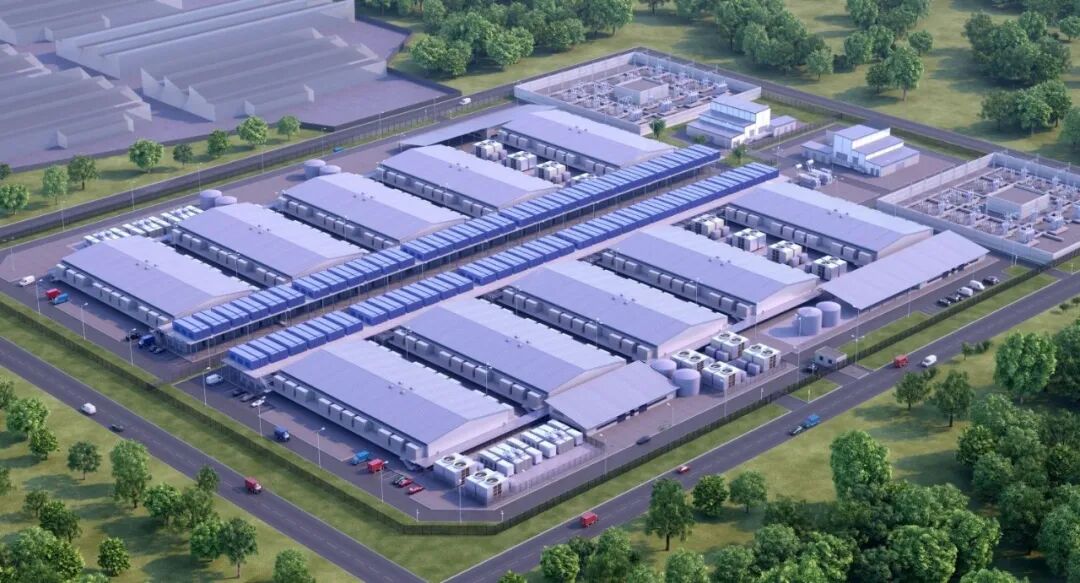
If policy serves as the booster rocket, market demand and regional dynamics form the fundamental engine driving this data center boom.
The Singapore Spillover Effect: Singapore has long been Southeast Asia’s most mature data center market, but it faces increasingly severe constraints on land, power, and environmental capacity. Consequently, Johor—located right next door to Singapore and offering vast land availability and scalable capacity—has naturally become the primary beneficiary of this demand overflow. When people talk about Malaysian data centers today, Johor is often the first place they think of. It is rapidly cementing its status as the frontline hub absorbing Singapore’s digital infrastructure spillover.
The Explosion of AI and Cloud Infrastructure: Traditional data centers historically serviced standard cloud workloads, e-commerce, content delivery networks (CDNs), and enterprise IT systems. Today, the advent of AI training, AI inference, GPU clusters, cloud-native architectures, sovereign clouds, and localized deployments has pushed data centers from “back-office facilities” to strategic infrastructure.
Therefore, the data center race is no longer just about who can erect buildings the fastest. It has evolved into a competition of:
Who can secure reliable power grid access?
Who can navigate regulatory approvals faster?
Who can meet the high-density power demands of the AI era?
Who can maintain sustainable operations under strict ESG and energy constraints?
Malaysia currently sits in an exceptionally advantageous position within this competitive landscape.
Where are the Best Locations to Build in Malaysia?

For enterprises and investors mapping out their footprint, Malaysia features two powerhouse core regions, supplemented by highly specialized emerging zones:
| Region | Primary Advantage | Ideal Project Types |
| Johor | Proximity to Singapore, low-latency connectivity, extensive land space for large-scale campuses. | Hyperscale campuses, AI-ready facilities, long-term regional expansions. |
| Klang Valley (Greater KL / Cyberjaya) | High market maturity, dense concentration of enterprise clients, complete digital ecosystem, proximity to corporate HQs and talent pools. | Enterprise digital services, mature cloud deployments, localized cloud nodes. |
| Penang | Strong industrial synergy with northern Malaysia’s manufacturing and electronics sectors. | Industrial-integrated data applications, manufacturing tech infrastructure. |
| Sarawak, Negeri Sembilan, Kedah | New land frontiers, emerging green energy options. | Greenfield developments, long-term sustainable alternatives. |
An Important Trend in Johor: Johor is transitioning from a period of raw, rapid growth into a phase of institutionalized, structural management. The state government has introduced dedicated data center development planning guidelines to regulate zoning, buffer zones, supporting infrastructure, and site selection logic. This means while opportunities in Johor remain massive, the state will become increasingly selective. Projects must demonstrate real energy efficiency, sustainability, and long-term network value to secure approval.
Will This Data Center Boom Last Indefinitely?
Yes, but the barrier to entry will rise significantly. This is a critical distinction to make. Malaysia is no longer handed out blanket approvals to every project that knocks on its door.
As the sheer volume of data centers grows rapidly, federal and state governments are paying closer attention to several highly realistic challenges:
Is the power grid genuinely sustainable?
Can local water infrastructure withstand the cooling demands?
Are the projects truly energy-efficient and optimized for low power usage effectiveness (PUE)?
Can these facilities attract high-value clients and advanced technologies?
Are they merely consuming local resources without driving broader domestic industrial upgrades?
Consequently, analyzing the market requires looking past the superficial buzz of “Malaysia is booming.” The real question to ask is: Who can secure the truly premium locations in Malaysia moving forward? Success will no longer be determined solely by financial capital, but by comprehensive master planning, ESG excellence, energy sourcing capabilities, and operational efficiency.
The next phase of Malaysia’s data center track is not about whether opportunities exist, but rather which operators those opportunities will concentrate around.
What Does This Boom Mean for the Broader Business Ecosystem?
When people witness a massive data center boom, their immediate assumption is often that only tier-1 tech giants stand to benefit. This is a misconception. A data center is never an isolated project; it acts as an anchor that pulls an entire, multifaceted industrial supply chain up along with it:
Real Estate & Infrastructure: Land development, industrial park management, and specialized construction.
Energy Management: Power grid integration, substation construction, and green energy sourcing solutions.
Hardware & Engineering: Advanced cooling systems, energy-saving technologies, and green building solutions.
Connectivity: Fiber optic networks, subsea cables, and high-speed interconnection infrastructure.
Operations: Security systems, fire safety, mechanical & electrical (M&E) engineering, and long-term facility operations.
Software & Applications: Cloud services, system integration, local AI application deployment, and data management.
Consulting: Local regulatory compliance, government relations, ESG auditing, and long-term operational support.
Ultimately, as global tech giants accelerate their migration into Malaysia, the real economic driver is the massive lifting effect it has on the entire digital infrastructure service ecosystem.
For local enterprises, regional service providers, and cross-border project teams, this represents far more than just a temporary window for infrastructure construction. It is a golden era for upgrading supporting services, driving regional synergy, and restructuring the Southeast Asian digital value chain.