In our journey of serving Chinese enterprises expanding into ASEAN, one question has been raised with increasing frequency recently—it is not about pricing, nor is it about sales channels. It is about Halal Certification.
Many enterprises initially did not view it as a core issue. However, when they actually entered markets like Malaysia, Indonesia, or even the Middle East, they realized that Halal is no longer an elective option—it is a mandatory condition for entry.
The Halal Economy: A Global-Scale Market, Not a Niche Demand
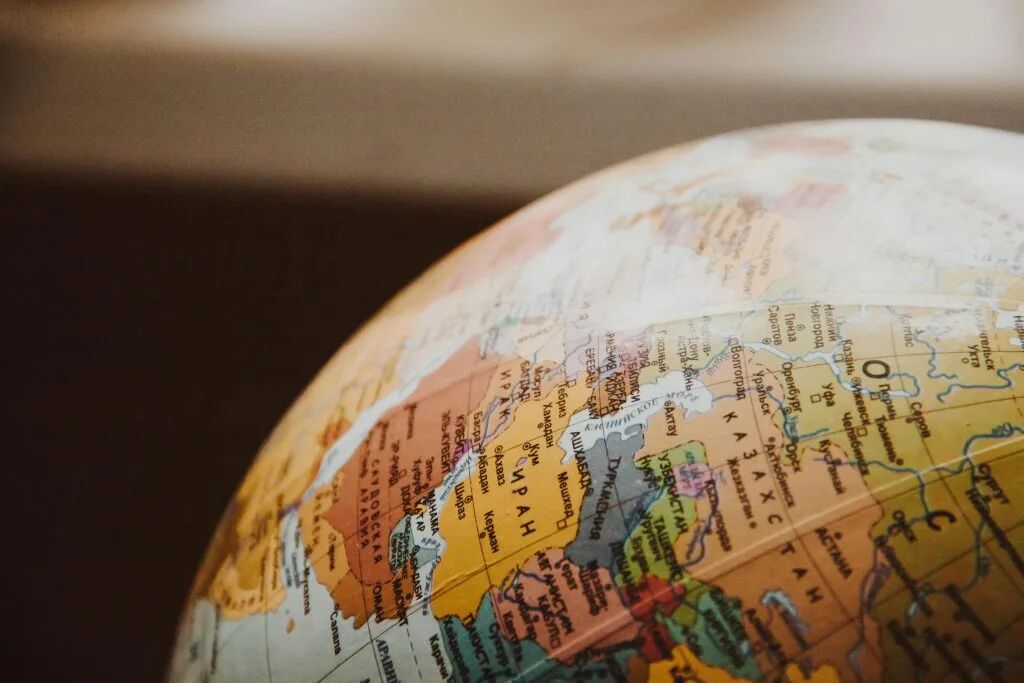
When many people hear the word “Halal,” their immediate reaction is still confined to religious or dietary restrictions. In reality, the Halal economy has evolved into a global industrial system spanning multiple sectors.
Demographic Base: The global Muslim population has exceeded 2 billion people, accounting for approximately one-quarter of the world’s population, and it continues to grow.
Market Scale: The global Halal market size broke past $2.3 trillion in 2025 and is projected to reach $3.4 trillion by 2030, representing a compound annual growth rate (CAGR) of 8.5%.
Furthermore, the Halal economy encompasses various fields including cosmetics, pharmaceuticals, tourism, logistics, and Islamic finance, elevating its overall scale to a definitive “multi-trillion-dollar level.” In other words, this is not a niche market segment, but a massive consumer system intersecting multiple industries.
Indonesia's New Policy: Halal Is Becoming a Market Access Barrier
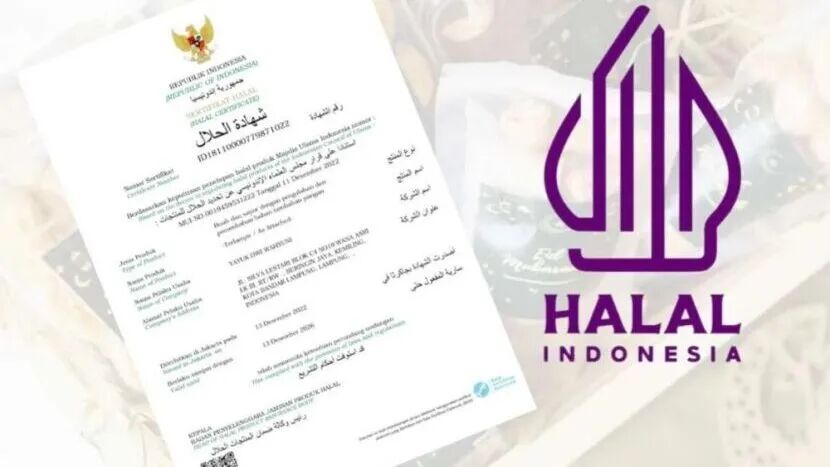
If Halal certification was considered a “bonus feature” in the past, it is fast becoming a “must-have” today.
As the nation with the world’s largest Muslim population, Indonesia entered a critical phase of mandatory Halal certification enforcement starting October 2024. Food, beverages, raw materials, additives, and slaughtered products were the first to be placed under strict regulatory focus.
More critically, in October 2026, these requirements will expand further to include:
Cosmetics
Pharmaceuticals and health supplements
Various consumer goods
A broader range of imported commodities
This signifies that entering the Indonesian market in the future will no longer be just about price competition; it will be a fundamental question of “whether you are qualified to enter.”
For Chinese enterprises, this represents a highly realistic shift:
In the past: Sell first, adapt later. Now: Achieve compliance first, then secure the opportunity to sell.
The Essence of Halal: A System of Trust and Supply Chain Management
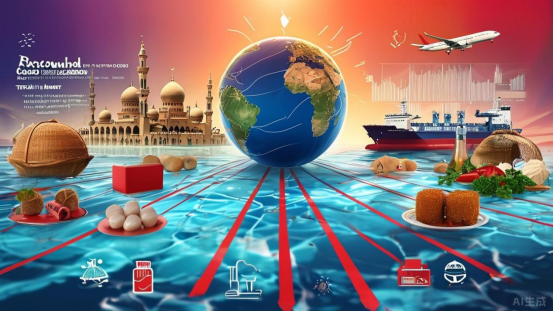
Many enterprises’ understanding of Halal remains stuck on whether a product contains pork. In practice, Halal certification evaluates the entire supply chain.
Essentially, it is a system that can be audited, traced, and verified. Therefore, the core competition in the Halal market is not about low prices, but a strategic formula: Certification + Standards + Supply Chain Management = Consumer Trust. Once established, this trust transforms into a long-term brand barrier.
Malaysia Is Emerging as the Critical Gateway to the Halal Market
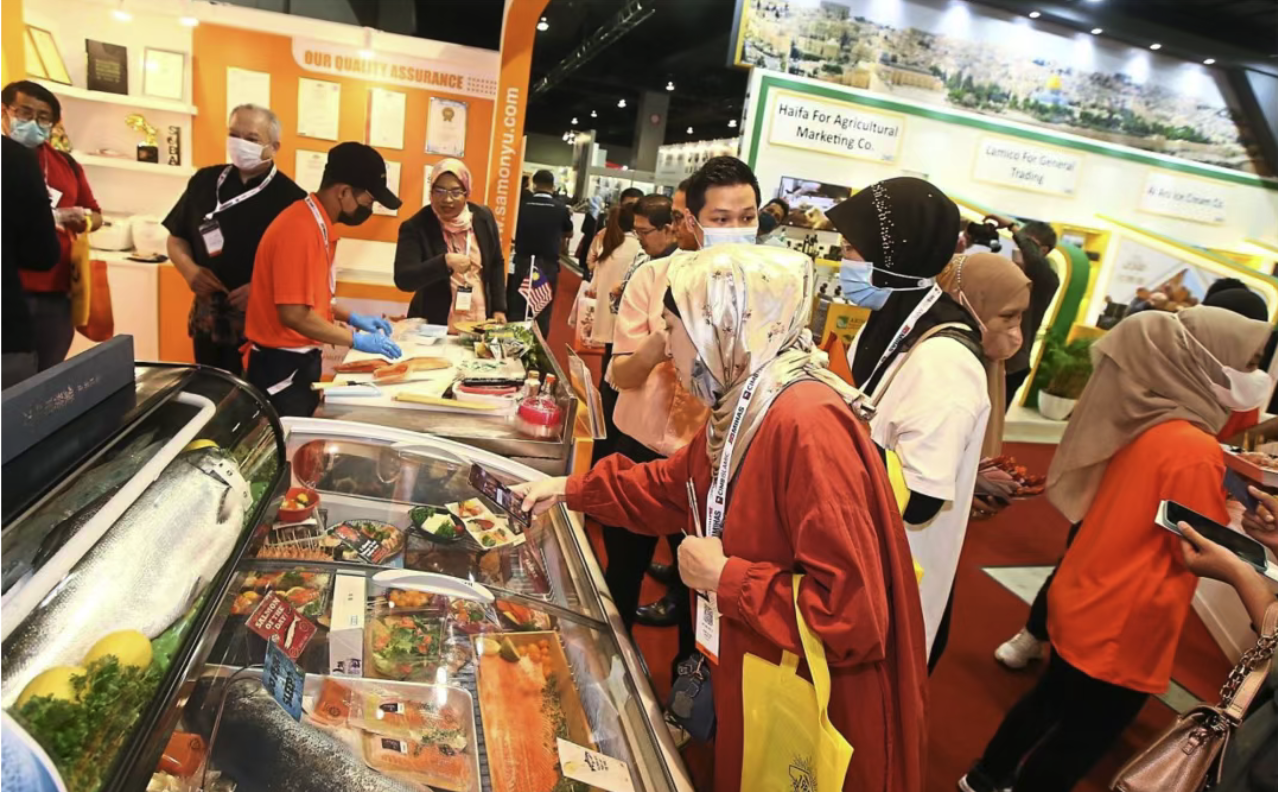
Within the Halal economy, Malaysia plays a highly specialized role.
As one of the nations with the most mature Halal frameworks globally, Malaysia’s certification is spearheaded by JAKIM. Its standards are strict and its system is comprehensive, enjoying exceptionally high recognition across multiple countries.
For Chinese enterprises, Malaysia is not just a consumer market, but a strategic launchpad.
The true value of Halal certification goes beyond merely obtaining a piece of paper; it forces an enterprise to re-examine its entire product ecosystem. From raw material procurement, manufacturing, packaging design, warehousing, and logistics, to storefront operations, employee training, and brand communication—every single link impacts consumer trust.
Consequently, an increasing number of companies no longer view Malaysia simply as a sales destination, but as a strategic springboard into the global Muslim consumer market. Malaysia equips enterprises with the structural capability to navigate the Halal world.
Case Studies
1. Why Nestlé Dominates the Halal Market Long-Term
If there is one company that recognized Halal as a core “systemic capability” early on, it is undoubtedly Nestlé.
Nestlé did not wait to enter a market before pursuing Halal certification. Instead, it integrated Halal standards directly into its production frameworks from day one. Raw material sourcing, manufacturing workflows, and supply chain management were all structured according to Halal requirements.
In Malaysia, Nestlé established one of its largest Halal production bases globally. Backed by JAKIM’s certification system, its products simultaneously supply the domestic market and export seamlessly to other Muslim nations. When markets like Indonesia began tightening their Halal policies, Nestlé incurred virtually zero extra cost to adapt. This proves that Halal competition is won during the preparation stage, not at the market end.
2. How Mixue Entered the Mainstream Market via Halal Certification
Let’s look at a case study of a Chinese brand—Mixue.
Many believe that Mixue’s success in Southeast Asia relies entirely on low prices and rapid expansion. However, in Malaysia, the brand executed a much more critical move: aggressively driving its storefronts to achieve Halal certification.
Currently, Mixue has over 100 stores in Malaysia that have successfully obtained JAKIM Halal certification. Everything from raw material procurement to in-store operational workflows is managed strictly under Halal standards.
The significance behind this goes far beyond just winning a certificate; it represents successfully entering the mainstream Muslim consumer market and building deep brand trust. Without Halal certification, no matter how low your prices are or how many stores you open, it is incredibly difficult to break into broader consumer scenarios. Mixue’s true upgrade was not about pricing, but the establishment of a “localization + compliance system.”
Conclusion: The Halal Economy Is Shifting from an Opportunity into a Rule
The Halal economy has been undervalued for a long time because it often seemed distant from conventional commercial logic. Today, however, it is undergoing three fundamental shifts:
From a Religious Requirement $\rightarrow$ A Consumer Standard
From a Product Label $\rightarrow$ A Supply Chain Rule
From a Market Opportunity $\rightarrow$ A Going Global Gateway
For Chinese enterprises, the earlier you grasp this reality, the greater your opportunity to seize the initiative in ASEAN and the wider global Muslim market. Sectors such as food and beverages, cosmetics, medical health, cross-border e-commerce, and supply chain enterprises must establish their layouts ahead of time.
Cross-border trade can help you enter a market, but Halal, localization, and compliance determine whether you can truly stay.