
If you walk through Kuala Lumpur’s bustling commercial districts recently—such as Bukit Bintang, Mont Kiara, Cheras, or Damansara—you might notice an increasingly visible shift. Familiar Chinese signage, Morandi-hued interior designs, Chinese-style consultation workflows, and Xiaohongshu (RED)-inspired marketing tactics are rapidly popping up. A growing wave of medical aesthetics brands, skin management centers, light aesthetics teams, anti-aging clinics, and beauty chains from China are training their sights on Malaysia, with many already planting deep roots here.
Behind this phenomenon lies something far deeper than just a generic “Southeast Asia has opportunities” sentiment. What is actually unfolding is a new evolutionary milestone: Chinese medical aesthetics is transitioning from “Made in China” to “Chinese Services Globalization.”
Hyper-Competition at Home Drives Southeast Asia as the New Release Valve

The medical aesthetics industry in China has entered a state of extreme neijuan (hyper-competition) in recent years. Price wars, traffic wars, livestream bidding, low-cost group buying, and aggressive channel kickbacks have become the daily survival reality for many clinics. Practitioners acutely feel that clients are harder to acquire, profit margins are thinning, and customer acquisition costs (CAC) are skyrocketing. In other words, China’s market does not lack demand; rather, it has locked into a fierce battle over a zero-sum pool of existing users.
Yet, it is precisely under this high-pressure crucible that the Chinese industry has forged a highly sophisticated system of core competencies. China now possesses world-leading light aesthetics operational frameworks, robust product and equipment supply chains, ultra-fast short-video conversion loops, mature private-domain (CRM) retention methodologies, and marketing teams that intimately understand female consumer psychology, aesthetic trends, and content expression.
Consequently, as the domestic market becomes suffocatingly crowded, it is only logical for experienced Chinese institutions armed with advanced operations and brand awareness to pivot their gaze overseas.
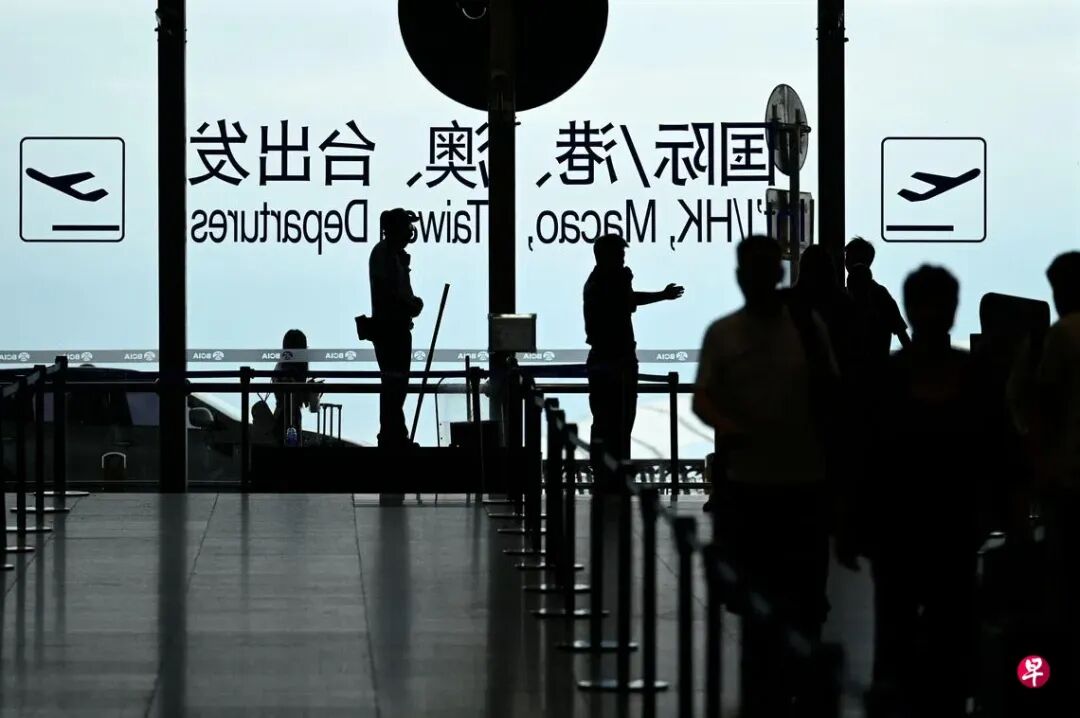
1. The True Market Driver: The Critical Mass of Arriving Chinese Nationals
Many assume that medical aesthetics clinics expand into Malaysia simply because local demand is generally high. This only captures half the truth.
Compared to China, Malaysia’s raw medical aesthetics consumption volume is modest; its market scale cannot be compared to tier-1 or new tier-1 cities like Beijing, Shanghai, Guangzhou, Shenzhen, Hangzhou, or Chengdu. The true game-changing catalyst is the skyrocketing number of Chinese nationals moving to and residing long-term in Malaysia.
These individuals are not short-term tourists. They consist of Malaysia My Second Home (MM2H) families, corporate globalization teams, cross-border e-commerce operators, international students, parents accompanying studying children, and high-net-worth investors. This demographic shares a definitive, uniform trait: they are already deeply accustomed to “routine medical aesthetics maintenance.”
In China’s top cities, treatments like skin boosters (mesotherapy), IPL (photofacials), Thermage, Ultra Therapy, professional skin management, and micro-injections are no longer viewed as occasional luxury splurges. Instead, they have become cyclical, routine maintenance—much like going to the gym, skincare regimes, or annual health checkups. When these consumers relocate to Malaysia, their habits do not vanish. They naturally seek out familiar service paradigms: Mandarin communication, shared aesthetic standards, Chinese-style consultation flows, optimal cost-performance ratios, frictionless booking experiences, and service teams that natively decode their consumer habits.
Thus, a highly stable niche market has crystallized. Many Chinese clinics entering Malaysia today are not building a market from absolute scratch; they are capturing an existing, pre-conditioned pool of demand that is simply “going global alongside the Chinese diaspora.”

2. Local Malaysian Chinese: An Undervalued Long-Term Consumption Bedrock
Beyond the arriving Chinese nationals, the local Malaysian Chinese community forms a vital foundation for long-term growth.
Historically, many Malaysian Chinese would fly to cities like Shanghai, Guangzhou, or Shenzhen specifically for treatments, highly favoring the aesthetics, technical skill, and service experiences of Chinese doctors. Today, as Chinese institutions, physician networks, products, and service models deploy directly into Malaysia, this outbound demand can be captured locally.
The local Chinese demographic exhibits a high baseline acceptance of skin management, anti-aging therapies, light aesthetics, and personal grooming, backed by strong purchasing power. Crucially, the local Chinese community relies heavily on tight-knit network recommendations, WeChat circles, Xiaohongshu recommendations, and word-of-mouth referrals. Consequently, Chinese clinics are entering a consumer circle that is naturally predisposed to understanding, accepting, and converting into loyal clients.
While Chinese expats generate immediate incremental demand, local Chinese consumers provide the bedrock for long-term sustainability.
The Competitive Advantage: A Multi-Dimensional Blueprint
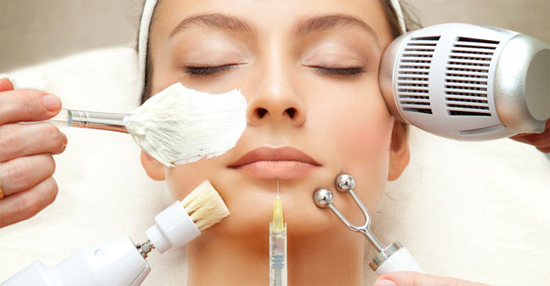
1. Deep Mastery of East Asian Aesthetics
Many local Malaysian clinics lean toward Western aesthetic paradigms, emphasizing sharp contours, deep dimensionality, and highly defined facial structures. Conversely, a vast majority of ethnic Chinese women seek refinements that harmonize with East Asian facial anatomy and traditional grooming ideals. Concepts like “the non-artificial look” (妈生感), “the youthful face” (幼态脸), “fluid contouring” (轮廓感), and “natural yet noticeable enhancements” are deeply understood by Chinese doctors, consultants, and clinical teams. In this industry, a shared aesthetic philosophy is the ultimate shorthand for building instant client trust.
2. Advanced Social Media Playbooks
Where many local clinics still rely on standard Facebook ads, basic Instagram posts, conventional flyers, or offline personal referrals, Chinese teams bring a hyper-optimized digital playbook. They utilize localized Xiaohongshu seeding, TikTok short-video matrices, private-domain WeChat ecosystems, KOL affiliate networks, community referral programs, and continuous post-treatment journey tracking. They do not merely “run ads”; they transform aesthetics into a holistic content-driven operation. They cultivate trust via content, maintain engagement via private domains, and drive high-lifetime-value (LTV) retention via exceptional clinical outcomes.
3. Ultra-High Granularity of Service
Consumers quickly notice that Chinese teams operate with an intensely meticulous level of service. From pre-treatment profiling, advanced skin analysis, and tailored program architecture, to real-time comfort management during procedures and rigorous post-treatment check-ins, the entire service pipeline is seamless. This is born out of domestic necessity: China’s market is so competitive that a single lapse in service quality or a solitary negative review can instantly lose a client. Transplanting this high-fidelity service into Malaysia resets consumer expectations and elevates the local industry standard.
The Reality Check: The True Competition Has Just Begun
It may currently appear that Malaysia’s medical aesthetics sector is in a golden “bonus window,” characterized by abundant opportunities, manageable competition, and customer acquisition costs far lower than those in China. However, this transition phase will not last forever.
As more Chinese brands, skin centers, light aesthetics teams, and beauty franchises flood the market, the sector will inevitably experience its own wave of heightened competition. Crucially, it will not simply replicate the crude price wars of the domestic market; instead, it will mature into a race centered on Compliance, Branding, and Deep Localization.
A common pitfall for arriving clinics is assuming they can copy-paste their exact products, treatments, machinery, and marketing scripts directly from China. Once on the ground, they encounter highly distinct regulatory frameworks:
Cosmetic Topical Products: Subject to strict National Pharmaceutical Regulatory Agency (NPRA) notification.
Aesthetics Devices and Machinery: Require rigorous Medical Device Authority (MDA) certification.
Clinical/Medical Interventions: Heavily governed by the Ministry of Health (MOH), demanding specific local medical practice licenses, strict clinic operation standards, and mandatory quotas for local registered healthcare practitioners.
Ultimately, long-term survival will not be decided by who has the flashiest marketing or the lowest prices. It will be determined by who achieves absolute regulatory compliance, who truly decodes local consumer nuances, and who builds authentic brand equity rather than chasing short-term traffic.
Conclusion

The migration of Chinese medical aesthetics into Malaysia transcends simple brand expansion or template replication. It represents the wholesale export of Chinese aesthetic philosophy, service workflows, operational architectures, and consumer culture into Southeast Asia.
While Malaysia may not transform into the “next South Korea,” it is rapidly cementing its status as the premier gateway into the ASEAN market and a critical proving ground for the globalization of Chinese services. Backed by a receptive local Chinese demographic, a steady stream of long-term Chinese expats, a business-friendly environment, and a strategic location linking the wider region, this beautiful industrial migration has only just begun.